Unpacking the Complexities of Heavy Haul Trucking Services: An Essential Industry Overview
Heavy haul trucking services represent a specialized and crucial facet of the global logistics landscape, dedicated to the transport of oversized and overweight cargo. This sector operates distinctly from general freight, navigating a complex web of regulations, engineering challenges, and safety imperatives. The successful execution of heavy haul operations underpins critical projects across numerous industries, from energy and construction to manufacturing and infrastructure development. This guide endeavors to provide an informative and neutral overview of the intricacies defining heavy haul trucking services.
Defining the Scope of Heavy Haul Operations
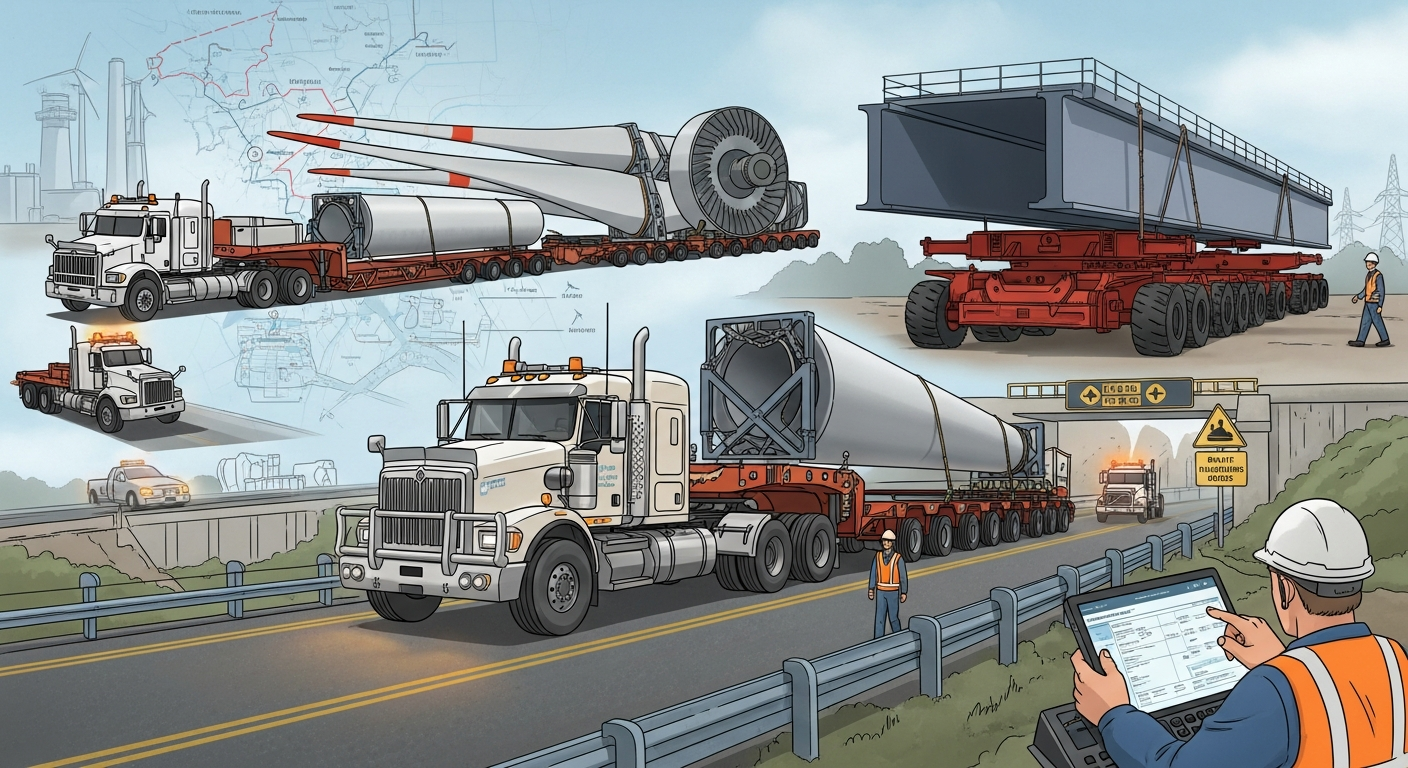
At its core, heavy haul trucking involves the movement of freight that exceeds the standard legal dimensions and/or weight limits for road transportation. Unlike conventional trucking, which typically handles palletized goods or standard containers, heavy haul trucking services are engaged when cargo is too large or too heavy to be accommodated by ordinary means. This often includes industrial machinery, wind turbine components, bridge sections, large manufacturing equipment, and various prefabricated structures. The parameters for what constitutes ‘oversized’ or ‘overweight’ vary significantly by jurisdiction, necessitating a deep understanding of local, state, and federal transport laws.
The Operational Pillars of Heavy Haul Trucking Services
Executing heavy haul trucking services effectively requires a multi-faceted approach, encompassing meticulous planning, specialized equipment, rigorous adherence to safety standards, and navigating a complex regulatory environment. Each element is interdependent, contributing to the successful and safe delivery of extraordinary cargo.
Regulatory Compliance and Permitting
One of the most critical aspects of heavy haul trucking services is compliance with an extensive array of permits and regulations. Each state or province often has its own set of rules regarding maximum permissible weights, dimensions, and necessary escorts. Federal regulations also dictate aspects such as driver hours of service and equipment standards. Obtaining the correct permits is a time-consuming process that requires precise load specifications, detailed route plans, and sometimes structural analyses of bridges and roads along the proposed path. Failure to secure appropriate permits or adhere to their stipulations can result in significant fines, delays, and safety hazards. Many heavy haul trucking services employ dedicated teams to manage this intricate administrative burden, ensuring all necessary documentation is in place well in advance of transport.
Specialized Equipment and Engineering
The successful execution of heavy haul trucking services hinges on the availability and appropriate deployment of specialized equipment. This extends beyond powerful tractor units to a diverse range of trailers designed to distribute immense weight and accommodate unusual dimensions. Common types include:
- Lowboy Trailers: Featuring a drop deck, these trailers are designed to transport tall loads by lowering the center of gravity, thereby reducing overall height.
- Multi-Axle Trailers: To distribute heavy loads over a larger surface area, these trailers feature numerous axles, significantly increasing their weight capacity and reducing stress on roads and bridges.
- Extendable Trailers: Capable of lengthening to accommodate exceptionally long cargo, such as wind turbine blades or bridge beams.
- Removable Gooseneck (RGN) Trailers: These trailers allow the front of the trailer to detach, creating a ramp for easy loading of self-propelled equipment.
- Self-Propelled Modular Transporters (SPMTs): For the most extreme heavy haul challenges, SPMTs are computer-controlled platforms that can move massive, multi-ton loads with precision, often without a traditional tractor unit.
Beyond the trailers, the tractor units themselves are specially engineered for heavy pulling power, often featuring multiple drive axles and reinforced chassis. Load securement is another engineering marvel, utilizing custom-fabricated tie-downs, chains, and bracing systems to prevent any movement of the cargo during transit.
Meticulous Route Planning and Surveying
Prior to any movement, comprehensive route planning is indispensable for heavy haul trucking services. This involves more than simply selecting a path on a map; it requires detailed route surveys where experts physically assess every inch of the proposed journey. Potential obstacles must be identified, including:
- Bridge heights and weight capacities
- Overhead utility lines (power, telephone, fiber optics)
- Traffic signals and streetlights
- Road widths, curves, and turning radii
- Railroad crossings and steep gradients
- Construction zones and detours
In some cases, temporary road modifications, utility line disconnections, or traffic control measures become necessary. This foresight and planning minimize delays, enhance safety, and prevent costly infrastructure damage. Advanced software and Geographic Information Systems (GIS) are often employed to aid in this complex planning phase, but human expertise remains paramount.
Safety Protocols and Risk Management
Safety is not merely a consideration but a foundational principle for heavy haul trucking services. The inherent risks associated with moving large, heavy objects demand stringent safety protocols. These include:
- Qualified Personnel: Drivers of heavy haul loads typically possess extensive experience, specialized training, and often specific endorsements on their commercial driver’s licenses.
- Escort Vehicles: Pilot cars and escort vehicles are routinely required to warn other motorists, manage traffic flow, and ensure the safe passage of the oversized load. These escorts are often equipped with specialized lighting, signage, and communication systems.
- Communication: Constant communication between the driver, escort vehicles, and dispatch is crucial, particularly during complex maneuvers or unexpected delays.
- Load Securement Audits: Before departure and at designated checkpoints, load securement is re-inspected to ensure the cargo remains stable and safely fastened.
- Emergency Preparedness: Contingency plans for breakdowns, accidents, or environmental factors are developed and communicated to all personnel involved.
The goal is to mitigate risks at every stage, protecting the cargo, personnel, public infrastructure, and other road users.
The Economic Significance of Heavy Haul Trucking Services
Heavy haul trucking services play an indispensable role in national and global economies. They are the arteries through which industrial growth and infrastructure development flow. Without the ability to transport massive components, projects such as:
- Construction of power plants (nuclear, fossil fuel, renewable)
- Development of large-scale manufacturing facilities
- Installation of critical infrastructure like bridges and tunnels
- Relocation of entire industrial operations
would be severely hampered or entirely impossible. These services facilitate investment, create jobs, and ensure the ongoing functionality of modern societies. The efficiency and reliability of heavy haul operations directly impact project timelines and budgets in capital-intensive industries.
Challenges and Future Trends in Heavy Haul
Despite their critical role, heavy haul trucking services face continuous challenges. Aging infrastructure, particularly bridges and roadways not designed for today’s superloads, poses ongoing hurdles. The increasing size of industrial components, driven by advancements in energy and manufacturing, continually pushes the boundaries of transport capabilities. Furthermore, a shortage of skilled drivers and technicians capable of handling these specialized operations is a persistent concern within the industry.
Looking ahead, advancements in technology are poised to further refine heavy haul trucking services. Enhanced telematics and IoT devices offer real-time tracking, improved equipment diagnostics, and predictive maintenance. Advanced route optimization software, coupled with AI and machine learning, may further streamline planning and permitting processes. Sustainable practices, such as optimizing fuel efficiency and exploring alternative fuels, are also gaining traction as the industry seeks to reduce its environmental footprint. However, the unique, complex nature of heavy haul transport suggests that human expertise, especially in engineering, planning, and on-the-ground execution, will remain irreplaceable.
Assessing Provider Capabilities in Heavy Haul
When considering heavy haul trucking services, understanding the attributes of capable providers is key. A provider’s demonstrated experience with similar cargo types and routes is often a strong indicator of their operational competence. Their fleet’s modernity, diversity, and maintenance records reflect their ability to handle varied and demanding transport tasks. Crucially, a robust safety record, comprehensive insurance coverage, and a transparent approach to regulatory compliance are non-negotiable. Furthermore, effective communication channels and the ability to provide detailed, accurate project planning and updates are hallmarks of dependable heavy haul operations. The emphasis should always be on a provider’s proven capacity to manage the inherent complexities and risks associated with specialized transport.
Conclusion
Heavy haul trucking services are far more than just transportation; they are intricate logistical operations demanding unparalleled expertise, specialized equipment, and stringent adherence to regulatory frameworks. This sector forms a fundamental backbone for large-scale industrial projects and infrastructure development globally. The challenges are significant, ranging from navigating complex permitting systems to overcoming infrastructure limitations, yet the industry continues to evolve through technological integration and a relentless focus on safety and precision. The successful movement of oversized and overweight cargo is a testament to sophisticated planning and skilled execution, enabling progress across numerous vital economic sectors.