Unpacking RGN Trailer Freight: A Comprehensive Look at Specialized Heavy Haulage Solutions
The transportation of oversized and overweight cargo represents a specialized segment within the logistics industry, demanding unique equipment and meticulous planning. Among the various solutions available, Removable Gooseneck (RGN) trailer freight stands out as a critical method for moving complex loads. This guide explores the foundational aspects, operational considerations, and strategic importance of RGN trailer freight, offering a comprehensive overview for those seeking to understand its role in specialized haulage.
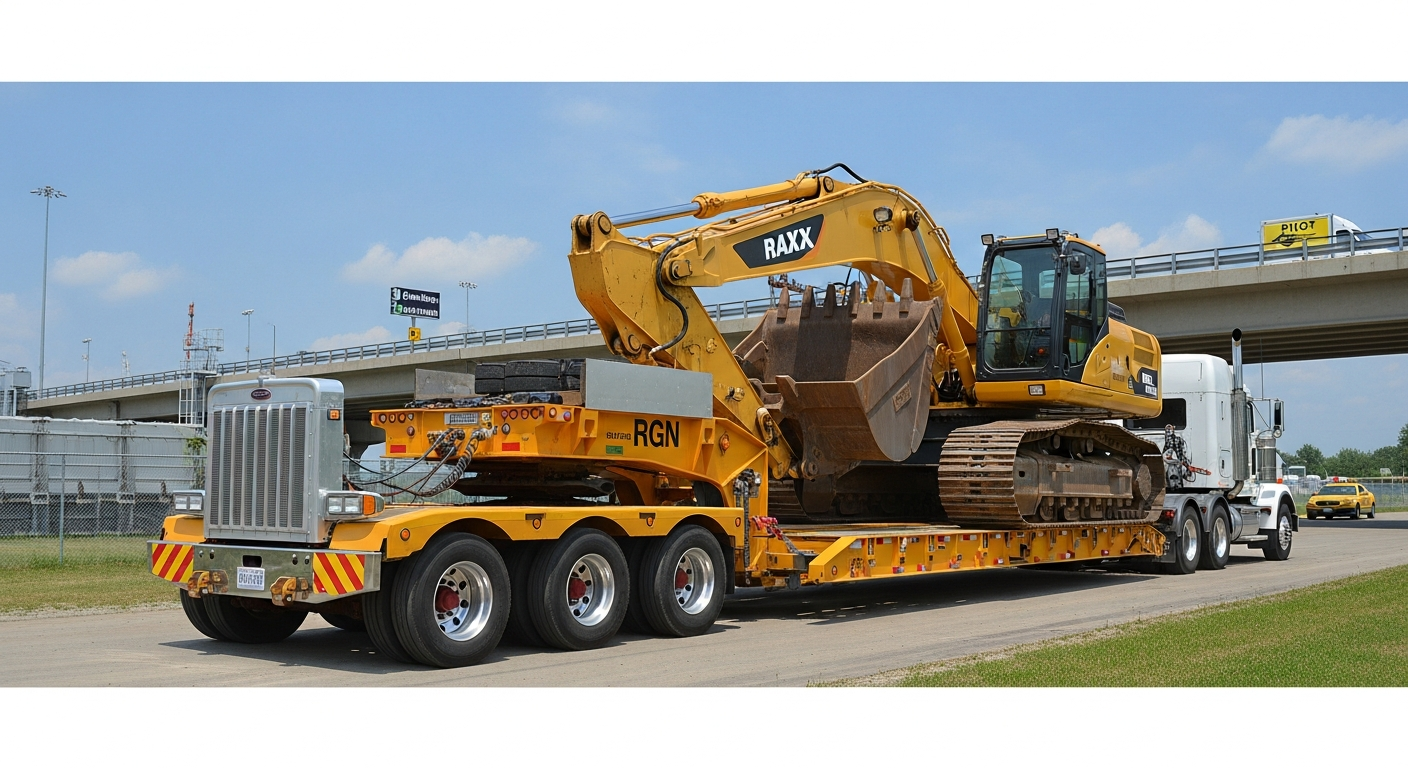
Defining Removable Gooseneck (RGN) Trailers
An RGN trailer, or Removable Gooseneck trailer, is a type of heavy-haul trailer specifically engineered to transport exceptionally tall, long, or heavy items. Its defining characteristic is a detachable front section, known as the gooseneck, which can be unhitched from the tractor. This innovative design allows the trailer’s deck to be lowered directly to the ground, creating a ramp that facilitates roll-on/roll-off loading and unloading of self-propelled equipment or other large cargo. This feature is particularly advantageous for machinery that cannot be lifted onto a standard flatbed or step deck trailer.
The term “RGN trailer freight” encapsulates the entire process of utilizing these specialized trailers, from initial planning and equipment selection to execution and delivery of the oversized cargo. It signifies a logistical challenge that moves beyond conventional trucking, requiring specific expertise and often navigating stringent regulatory frameworks.
The Operational Mechanics and Types of RGN Trailers
The core functionality of an RGN trailer revolves around its removable gooseneck. When the gooseneck is detached from the tractor, it lowers the front end of the trailer to ground level. After the cargo is loaded onto the main deck, the gooseneck is reattached, and hydraulic systems often raise the trailer to its transport height. This mechanism is fundamental to the efficiency of RGN trailer freight operations.
RGN trailers come in several configurations, each designed to address different load requirements:
- Hydraulic Detachable Gooseneck (HDG): These are the most common RGN trailers, utilizing hydraulic cylinders to raise and lower the gooseneck. They offer excellent versatility in adjusting deck height to navigate varying road conditions or bridge clearances.
- Mechanical Detachable Gooseneck (MDG): Less common than hydraulic versions, MDG trailers require manual intervention or the use of a crane to detach and reattach the gooseneck. While simpler in design, they offer less flexibility in deck height adjustments.
- Extendable RGNs: Some RGN trailers feature an extendable main deck, allowing them to accommodate exceptionally long loads that would otherwise require multiple trailers or specialized permits for length.
- Multi-Axle RGNs: For extremely heavy loads, RGN trailers can be configured with numerous axles, sometimes up to 20 or more, to distribute the weight evenly and comply with axle weight restrictions. Each additional axle adds to the payload capacity but also increases the complexity and cost of RGN trailer freight.
When RGN Trailer Freight Becomes Indispensable
RGN trailer freight is not a default choice but a necessity for specific types of cargo. Its distinct capabilities make it the preferred, and often only, viable option for:
- Self-Propelled Machinery: Construction equipment (excavators, bulldozers, loaders), agricultural machinery (harvesters, large tractors), and specialized vehicles (drilling rigs, military equipment) can be driven directly onto an RGN trailer, eliminating the need for cranes or other lifting equipment at loading and unloading points.
- Oversized and Overweight Industrial Components: Large pressure vessels, turbines, generators, transformers, and sections of wind towers often exceed the legal dimensions or weight limits for standard trailers. The low deck height of an RGN trailer is crucial for maintaining overall height clearance, especially under bridges and power lines.
- Manufacturing Equipment: Large presses, fabrication machines, and assembly line components frequently require the specialized handling provided by RGN trailer freight due to their dimensions and weight.
- Modular Buildings and Structures: Sections of modular homes, portable classrooms, and other prefabricated structures, when exceeding standard height or weight, often benefit from the low loading capability and stable transport offered by an RGN.
The decision to employ RGN trailer freight is typically driven by the inherent characteristics of the cargo, specifically its height, weight, and the method by which it needs to be loaded and unloaded.
Advantages of Utilizing RGN Trailer Freight
The specialized nature of RGN trailer freight translates into several key advantages for transporting challenging loads:
- Low Deck Height: This is arguably the most significant advantage. The low profile of the main deck keeps the overall height of the load as low as possible, crucial for navigating routes with height restrictions like bridges, tunnels, and overhead utilities. This often avoids the need for extensive route deviations.
- Roll-On/Roll-Off Loading: For self-propelled equipment, the ability to drive directly onto the trailer deck significantly simplifies and expedites the loading and unloading process. This reduces the risk of damage associated with crane lifts and minimizes operational time.
- Enhanced Stability: Because the cargo sits lower to the ground, RGN trailers offer a lower center of gravity. This translates to increased stability during transit, particularly important for tall or top-heavy loads, contributing to safer transportation.
- Versatility for Complex Loads: The design flexibility, including options for extendable decks and multiple axles, allows RGN trailer freight to adapt to a wide array of dimensions and weights that would be impossible for conventional trailers.
Challenges and Considerations in RGN Trailer Freight
While offering distinct advantages, RGN trailer freight also presents a complex set of challenges that demand careful attention and specialized expertise:
- Permitting and Regulations: Moving oversized or overweight loads with RGN trailer freight typically requires special permits from state and local authorities along the entire route. These permits often dictate specific travel times, escort requirements, and route restrictions. The application process can be lengthy and varies significantly between jurisdictions.
- Route Planning and Surveys: Meticulous route planning is essential. This involves surveying the entire route for potential obstructions such as low bridges, tight turns, utility lines, and road construction. Often, utility companies need to be engaged to lift or temporarily move power lines. This pre-planning is a critical component of successful RGN trailer freight operations.
- Specialized Equipment and Maintenance: RGN trailers are complex pieces of machinery requiring regular, specialized maintenance. The hydraulic systems, multiple axles, and structural integrity must be in peak condition to safely handle heavy loads.
- Driver Expertise: Operating an RGN trailer requires highly experienced and certified drivers. They must be adept at maneuvering exceptionally long and wide vehicles, often with pilot cars, and understand the nuances of load securement for oversized cargo. Their knowledge of permit regulations and emergency procedures is paramount.
- Cost Implications: Due to the specialized equipment, extensive planning, permitting, escort services, and driver expertise required, RGN trailer freight is generally more expensive than standard freight services. These costs are a necessary component for safe and compliant heavy haulage.
- Weather Dependency: Adverse weather conditions such as heavy winds, snow, or ice can significantly impact the safety and feasibility of RGN trailer freight, often leading to delays and rescheduling.
Regulatory Landscape and Safety Protocols
The regulatory environment surrounding RGN trailer freight is robust and complex, primarily aimed at ensuring public safety. Compliance with federal, state, and local regulations is non-negotiable. These regulations typically cover:
- Weight Limits: Axle weight, gross vehicle weight, and bridge formula limits are strictly enforced. RGN trailers are designed to distribute weight over more axles to meet these requirements.
- Dimension Limits: Maximum legal height, width, and length vary by jurisdiction. Oversized loads necessitate permits and often escorts.
- Escort Vehicle Requirements: Depending on the dimensions of the load, front and/or rear escort vehicles (pilot cars) may be mandated. These escorts help manage traffic, identify hazards, and communicate with the truck driver.
- Signage and Lighting: Oversized loads must be clearly marked with “OVERSIZE LOAD” banners and have appropriate lighting, flags, and reflectors to enhance visibility.
- Hours of Service: Drivers of heavy-haul RGN trailer freight are subject to strict hours of service regulations to prevent driver fatigue.
Safety protocols extend beyond regulatory compliance to include rigorous load securement practices, pre-trip inspections, ongoing communication between the driver and escorts, and contingency planning for unforeseen circumstances.
Technological Influences on RGN Trailer Freight
Modern technology is continually enhancing the efficiency and safety of RGN trailer freight operations. Advancements include:
- GPS and Route Optimization Software: Sophisticated mapping and routing tools can analyze routes for height, weight, and width restrictions, identifying optimal paths and potential obstacles in real-time.
- Telematics and Remote Monitoring: GPS tracking, onboard diagnostics, and remote monitoring systems provide real-time data on vehicle location, speed, fuel consumption, and even tire pressure, improving operational visibility and proactive maintenance.
- Advanced Trailer Designs: Innovations in materials and engineering are leading to lighter, stronger, and more versatile RGN trailers, some featuring automated steering axles for better maneuverability in tight spaces.
- Digital Permitting Systems: The shift towards electronic permitting systems is streamlining the application and approval process for oversized loads, reducing administrative burdens and potential delays.
These technological integrations contribute to more predictable and safer execution of RGN trailer freight movements, although the human element of experienced drivers and planners remains indispensable.
Strategic Planning for Successful RGN Trailer Freight Operations
Executing a successful RGN trailer freight movement is a multifaceted endeavor that requires strategic planning and coordination. Key elements include:
- Detailed Load Analysis: Thoroughly understanding the cargo’s exact dimensions, weight, center of gravity, and any special handling requirements is the first step.
- Equipment Selection: Choosing the right RGN trailer configuration (e.g., number of axles, extendable deck) based on the load analysis and route constraints.
- Permit Acquisition and Route Survey: Commencing the permitting process well in advance and conducting a comprehensive route survey to identify and mitigate potential obstacles.
- Carrier and Driver Selection: Partnering with experienced heavy-haul carriers and certified drivers who have a proven track record in RGN trailer freight operations.
- Communication and Coordination: Maintaining clear and constant communication among all stakeholders—shipper, carrier, drivers, escorts, and relevant authorities—throughout the transportation process.
- Risk Management: Developing contingency plans for potential delays, mechanical issues, or unforeseen route changes. Adequate insurance coverage for the cargo and operations is also a critical consideration.
Conclusion
RGN trailer freight represents a specialized and essential capability within the broader logistics landscape. It enables the movement of critical oversized and overweight cargo that is vital to industries such as construction, energy, manufacturing, and infrastructure development. The inherent advantages of low deck height and roll-on/roll-off loading are balanced by the complexities of extensive permitting, meticulous route planning, and the demand for highly skilled personnel. As industries continue to produce larger and heavier components, the role of RGN trailer freight remains foundational, driven by a commitment to safety, compliance, and precise execution in the face of significant logistical challenges.