AI in Nursing Practice: Transforming Healthcare for the Future
Artificial Intelligence (AI) is no longer just a futuristic concept – it is now a critical part of modern healthcare. In nursing, AI is rapidly reshaping patient care, hospital operations, and decision-making processes. From automating routine tasks to improving diagnostic accuracy, the integration of AI in Nursing Practice offers both opportunities and challenges. This article explores the role of AI in nursing across time, highlighting current applications, future trends, and ethical considerations.
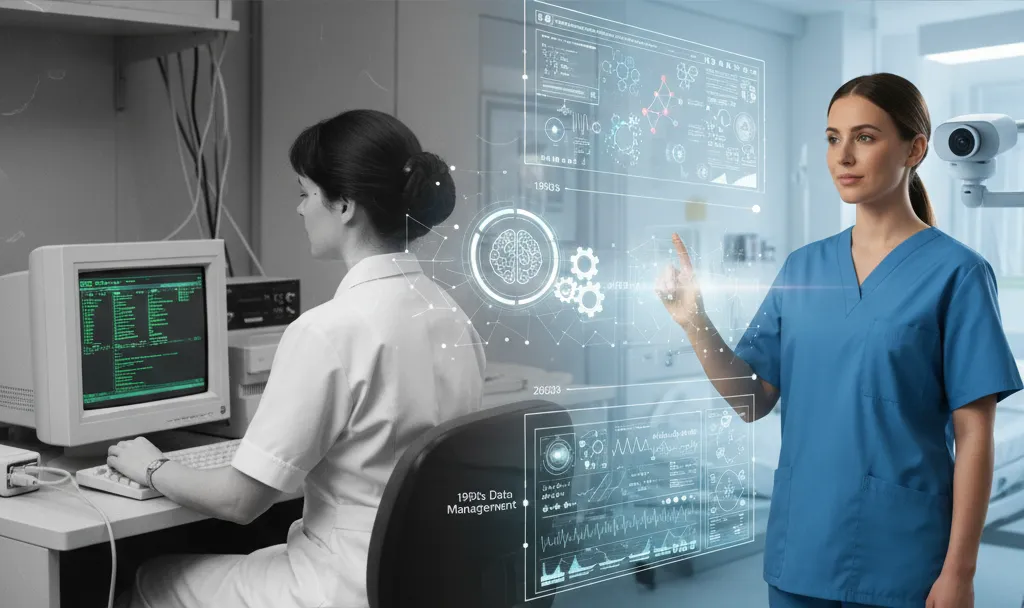
1. The Evolution of AI in Healthcare
The concept of AI in Nursing Practice can be traced back to early innovations in healthcare automation. Initially, AI was primarily used in data management and predictive modeling. Over the last two decades, advances in machine learning, natural language processing, and robotics have allowed AI to become an integral part of clinical practice.
Today, nurses rely on AI-powered tools for clinical decision support, patient monitoring, and workflow optimization. These advancements are not just technical improvements – they represent a shift in how healthcare providers approach patient care.
Historical Background
In the 1990s, hospitals began implementing electronic health records (EHRs), paving the way for AI-driven analytics. By the 2010s, machine learning was introduced to predict patient deterioration, enabling nurses to respond faster. Now, in the 2020s, AI systems are capable of diagnosing diseases, recommending treatments, and even offering personalized care plans.
2. Current Applications of AI in Nursing
One of the most significant impacts of AI in Nursing Practice today is its ability to reduce administrative burdens. Nurses spend a substantial amount of time on documentation, which AI systems can now automate through voice recognition and smart charting tools.
AI also assists in patient monitoring, where wearable devices track vital signs in real time and alert nurses when abnormalities occur. This not only enhances patient safety but also reduces workload pressure on nursing staff.
Examples of Current AI Tools
- AI-powered EHR assistants that minimize manual charting
- Smart infusion pumps that adjust medication dosage automatically
- Wearable monitors that detect heart rate, oxygen levels, and sleep patterns
3. AI in Clinical Decision Support
Decision-making is one of the most critical aspects of nursing. AI in Nursing Practice enhances this process by analyzing large datasets and providing evidence-based recommendations. These systems allow nurses to detect early signs of sepsis, manage chronic conditions, and anticipate patient deterioration.
By combining predictive analytics with real-time patient data, nurses can make more accurate and timely decisions, improving overall patient outcomes.
Case Study: Predicting Sepsis
Hospitals using AI-driven sepsis prediction tools have reported significant reductions in mortality rates. These systems continuously scan patient data for risk indicators, notifying nurses when intervention is required.
4. Enhancing Patient Monitoring and Safety
Patient safety remains a top priority in healthcare. With AI in Nursing Practice, continuous monitoring has become more effective. AI algorithms analyze data from bedside monitors, wearable devices, and EHRs to identify risk factors in real time.
This technology not only helps prevent medical errors but also ensures that patients with chronic conditions receive proactive care. For example, AI-powered fall detection systems in elderly care units alert nurses before accidents occur.
Benefits for Nurses and Patients
- Reduced risk of human error in monitoring
- Improved response time to emergencies
- Enhanced patient comfort and confidence in healthcare systems
5. AI-Powered Robotics in Nursing
Another revolutionary application of AI in Nursing Practice is robotics. Robots equipped with AI can perform tasks such as medication delivery, patient lifting, and even assisting with surgeries. This allows nurses to focus more on patient-centered care rather than routine physical labor.
Some AI-driven robots are designed to interact with patients, providing companionship for elderly or isolated individuals. These innovations reduce loneliness and improve mental health outcomes.
Examples of Nursing Robots
- Medication delivery robots in hospital wards
- Robotic arms that assist in physical therapy
- Social robots that engage in conversation with patients
6. AI in Nursing Education and Training
The role of AI in Nursing Practice extends beyond patient care into education. Nursing schools now use AI-powered simulations and virtual reality (VR) to train students. These tools allow future nurses to practice real-life scenarios in a safe and controlled environment.
AI also supports continuing education for experienced nurses by analyzing individual skill gaps and recommending personalized training modules.
How AI Improves Training
Personalized Learning
AI identifies strengths and weaknesses of nursing students, tailoring lessons accordingly.
Simulation-Based Training
Virtual patients powered by AI provide realistic scenarios for clinical decision-making practice.
7. Ethical Considerations of AI in Nursing
While AI in Nursing Practice offers many advantages, it also raises ethical challenges. Issues such as patient privacy, data security, and potential job displacement must be carefully managed. Nurses are often at the forefront of these debates, balancing the benefits of technology with patient rights.
Another concern is the possibility of bias in AI algorithms, which may lead to unequal treatment of patients based on race, gender, or socioeconomic background.
Key Ethical Issues
- Data privacy and confidentiality
- Algorithmic bias and fairness
- Maintaining human empathy in patient care
8. Challenges of Implementing AI in Nursing Practice
Despite the potential of AI in Nursing Practice, implementation is not without challenges. Many healthcare facilities face difficulties such as high costs, lack of technical infrastructure, and resistance to change among staff.
Training nurses to use AI systems effectively is another challenge. Without proper training, technology adoption may slow down, reducing its intended benefits.
Main Barriers
- Financial investment in AI tools
- Resistance from traditional healthcare workers
- Complex integration with existing hospital systems
9. Future Trends of AI in Nursing Practice
The future of AI in Nursing Practice promises even greater innovation. Advances in predictive analytics, personalized medicine, and natural language processing will empower nurses to deliver more effective care.
We can also expect increased use of AI in telehealth, enabling nurses to monitor patients remotely and provide virtual consultations worldwide.
Emerging Technologies
- AI-driven genomic medicine for personalized care
- Natural language processing for better documentation
- Blockchain integration for secure patient data management
10. The Future Role of Nurses in an AI-Driven World
As AI continues to evolve, the role of nurses will also change. Rather than replacing nurses, AI in Nursing Practice is designed to complement their skills, allowing them to focus more on empathy, communication, and patient advocacy.
Nurses of the future will be technology-empowered caregivers, blending clinical expertise with AI-driven insights to deliver holistic care.
The Human Touch in AI Nursing
AI cannot replicate empathy and compassion – the cornerstones of nursing. Therefore, the integration of AI should empower nurses, not diminish their essential role in patient care.
Conclusion
In summary, AI in Nursing Practice is revolutionizing the way healthcare is delivered. From clinical decision support to robotics and education, AI enhances efficiency, safety, and patient outcomes. However, ethical challenges and implementation barriers must be addressed to maximize its potential. The future of nursing lies in a balanced partnership between human compassion and technological innovation, ensuring that patients receive the best of both worlds.